
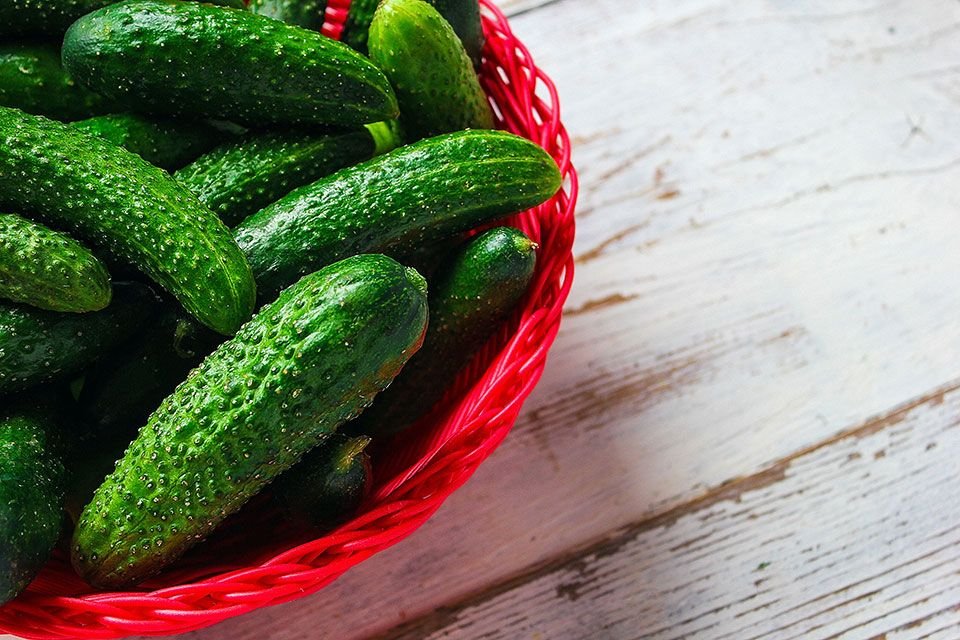
Cucumber in smoothies is one of those combinations that deserves more attention. While berries, bananas, and mangoes tend to get the spotlight, cucumber is one of my favorite ingredients when I want a smoothie to taste lighter, fresher, and more refreshing.
Its crisp, mild flavor works especially well with sweet fruits, citrus, leafy greens, and fresh herbs. Cucumber also brings plenty of moisture to the blender, so you may need less added liquid than you’d expect.
Pair it with apple for something crisp, pineapple or mango for a tropical blend, or lemon, ginger, and mint when you want a brighter, fresher flavor. If you’re wondering whether you can put cucumber in a smoothie, whether you should peel it first, or which fruits pair best with it, this guide covers everything you need to know.
What Is Cucumber?
Cucumber is a crisp, refreshing produce staple known for its high water content and mild flavor. Although it’s commonly treated as a vegetable in the kitchen, cucumber is botanically a fruit because it develops from a flower and contains seeds.
There are many varieties of cucumber, but the ones you’re most likely to encounter at the grocery store are standard slicing cucumbers, English cucumbers, and smaller Persian cucumbers.
English cucumbers are particularly convenient when using cucumber in smoothies because their skin is relatively thin, their seeds are small, and their flavor tends to be mild.
Standard cucumbers can work just as well, although their thicker skin and larger seeds sometimes benefit from a little extra preparation.
Can You Put Cucumber In A Smoothie?
Absolutely. Using cucumber in smoothies is an easy way to add a crisp, fresh flavor to both fruit and green blends.
Unlike banana or avocado, cucumber won’t create a thick, creamy texture. Think of it as a refreshing base ingredient instead. If you’re trying it for the first time, pair it with apple, pineapple, mango, or watermelon.
Cucumber’s subtle flavor is another advantage. Rather than competing with stronger ingredients, it tends to blend into the background while making the overall drink taste fresher.
If you’ve never tried cucumber in a smoothie before, pairing it with a naturally sweet fruit such as apple, pineapple, mango, or watermelon is an easy place to start.
What Does Cucumber Taste Like In Smoothies?
In a smoothie, cucumber tastes clean, crisp, and slightly green, but it’s usually much milder than people expect. Once you blend it with fruit, it tends to sit in the background rather than take over the drink.
Pineapple or mango makes it sweeter, lemon or lime gives it some zing, and mint makes the whole smoothie taste extra cool and refreshing. Ginger is another favorite because its spicy bite contrasts nicely with cucumber’s mild flavor.
So no, a cucumber smoothie doesn’t have to taste like a blended salad. The ingredients you pair with it make all the difference.
Why Cucumber Works So Well In Smoothies
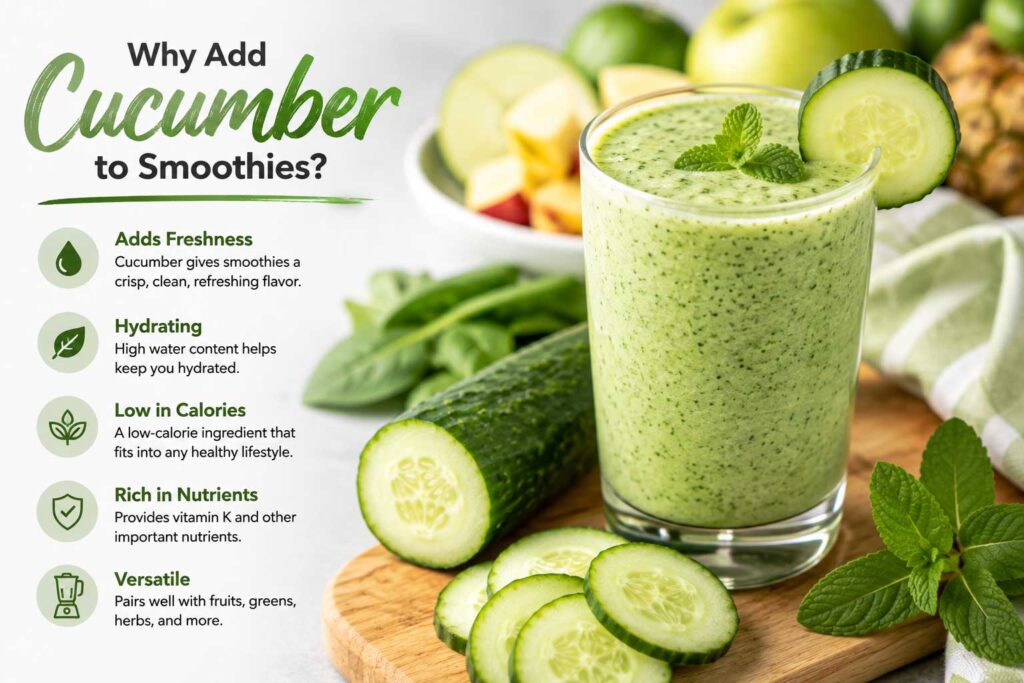
There are several reasons I like using cucumber in smoothies, especially when I’m looking for something lighter than a banana- or yogurt-heavy blend.
It Adds Freshness Without Overpowering Other Ingredients
Cucumber has a delicate flavor, so it rarely becomes the dominant ingredient in a smoothie. Instead, it provides a fresh background that allows fruits and other ingredients to shine.
This is especially useful with naturally sweet fruits. A little cucumber can keep a fruit-heavy smoothie from tasting overly sweet.
It Naturally Adds Liquid
Cucumber contains a large amount of water. Once blended, that moisture becomes part of the smoothie and can reduce the amount of additional liquid you need.
Start with less water, milk, coconut water, or juice than you normally would. You can always add more after blending.
It Pairs With Both Fruits And Greens
Some smoothie ingredients work best in either fruit smoothies or green smoothies. Cucumber works beautifully in both.
You can combine it with pineapple and mango for a tropical drink or blend it with spinach, apple, lemon, and ginger for something greener and more refreshing.
It Creates A Lighter Smoothie
Bananas, yogurt, oats, nut butter, and avocado all add body and richness. Cucumber does almost the opposite.
It can make a smoothie feel lighter and more refreshing, which is especially appealing during warm weather or whenever you don’t want a particularly heavy drink.
Health Benefits Of Cucumber
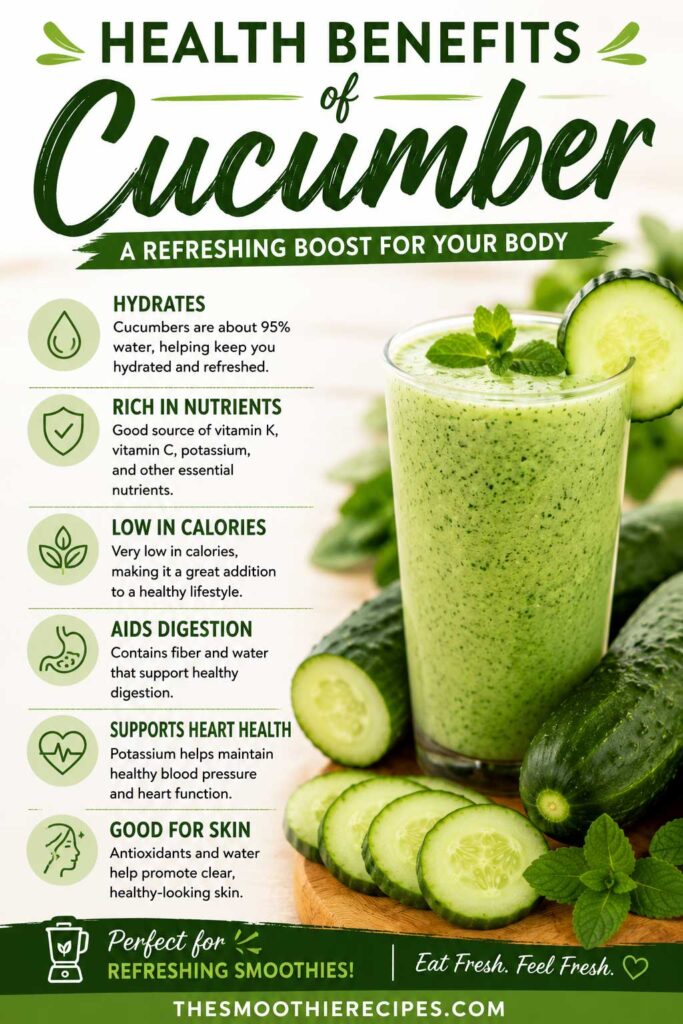
Using cucumber in smoothies isn’t only about its crisp, refreshing flavor. It also adds water and small amounts of several nutrients to the finished drink.
High Water Content
Fresh cucumber is composed mostly of water, which is one reason it tastes so refreshing. Adding cucumber to smoothies can contribute additional fluid along with the other ingredients in your drink.
It’s still important to drink enough water throughout the day rather than relying on smoothies alone for hydration.
Provides Vitamin K
Cucumber provides vitamin K, with some of it concentrated in the skin. Vitamin K plays a role in normal blood clotting and bone health. You can find a detailed breakdown of cucumber’s vitamins, minerals, calories, and other nutrients in the USDA FoodData Central database.
The Harvard T.H. Chan School of Public Health provides a helpful overview of vitamin K and its functions in the body.
Keeping the cucumber skin on when appropriate can also help retain more of the nutrients and fiber found in the whole ingredient.
Contains Small Amounts Of Other Nutrients
Cucumber also contributes smaller amounts of several vitamins and minerals. The exact nutritional content depends on the variety, serving size, and whether the cucumber is peeled.
On its own, cucumber isn’t a major source of most nutrients, but it fits easily into smoothies that include a wider variety of fruits, greens, seeds, and other whole-food ingredients.
An Easy Way To Add More Produce
Smoothies can make it easier to combine several fruits and vegetables in a single drink. USDA MyPlate also encourages eating a variety of fruits and vegetables as part of an overall eating pattern.
Cucumber’s mild flavor makes it particularly useful if you want to add a fresh, green ingredient to a fruit smoothie without dramatically changing the flavor.
Should You Peel Cucumber For Smoothies?
Not necessarily.
If you’re using an English or Persian cucumber with tender skin, you can usually leave the peel on. Wash the cucumber thoroughly, trim the ends, cut it into chunks, and add it directly to your blender.
Leaving the skin on also means you’re using more of the whole cucumber.
Standard slicing cucumbers sometimes have thicker or slightly bitter skin. If the peel feels particularly tough or waxy, removing some or all of it can produce a smoother, milder smoothie.
There’s no strict rule here. It comes down to the type of cucumber you’re using and the texture you prefer.
Should You Remove Cucumber Seeds?
Most of the time, no.
English and Persian cucumbers contain relatively small, tender seeds that disappear easily in a good blender.
Larger slicing cucumbers can sometimes develop more noticeable seeds, particularly when they’re very mature. If you cut one open and find large, tough seeds, simply scrape them out with a spoon before blending.
Otherwise, there’s no reason to make extra work for yourself.
Best Cucumbers For Smoothies
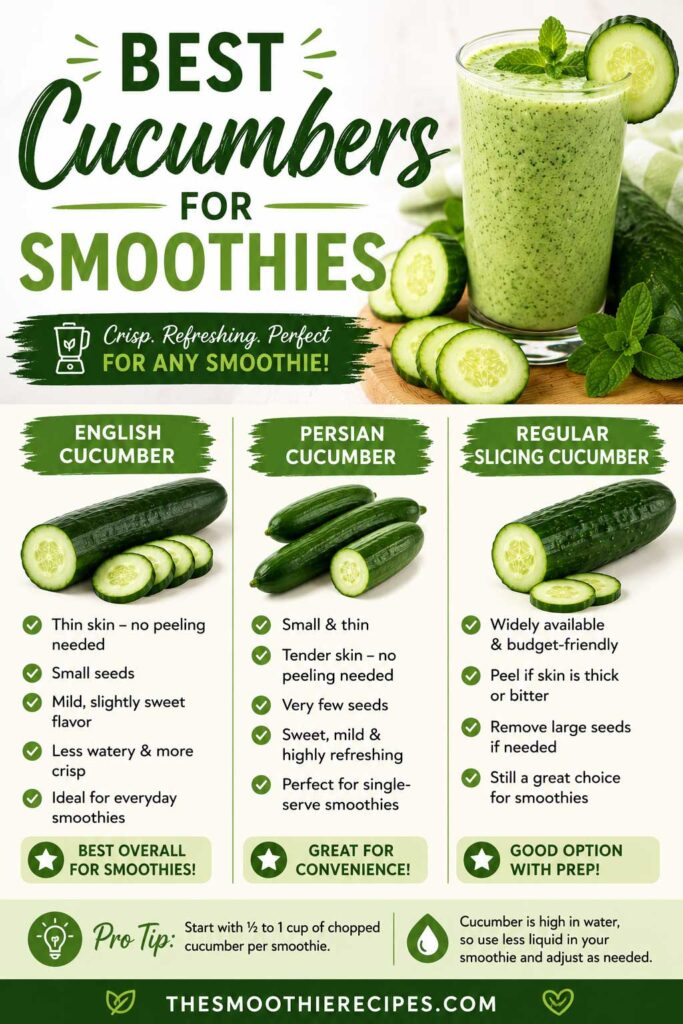
When you’re using cucumber in smoothies, the variety can make a difference in how much peeling or seed removal you’ll need to do.
English Cucumber
English cucumber is one of my favorite options for smoothies because it’s incredibly easy to work with. If I’m buying cucumber specifically for smoothies, English cucumber is usually the one I reach for.
The skin is thin, the seeds are small, and the flavor is mild. You can usually wash it, chop it, and toss it directly into the blender.
Persian Cucumber
Persian cucumbers are smaller but have many of the same advantages. They’re crisp, mildly sweet, and generally have tender skin.
They’re particularly convenient when you’re making a single smoothie and don’t need an entire large cucumber.
Regular Slicing Cucumber
Regular grocery-store cucumbers work perfectly well too.
Depending on the cucumber, you may want to peel thick skin or remove large seeds before blending. Once prepared, they provide the same refreshing quality that makes cucumber so useful in smoothies.
What Fruits Go Well With Cucumber?
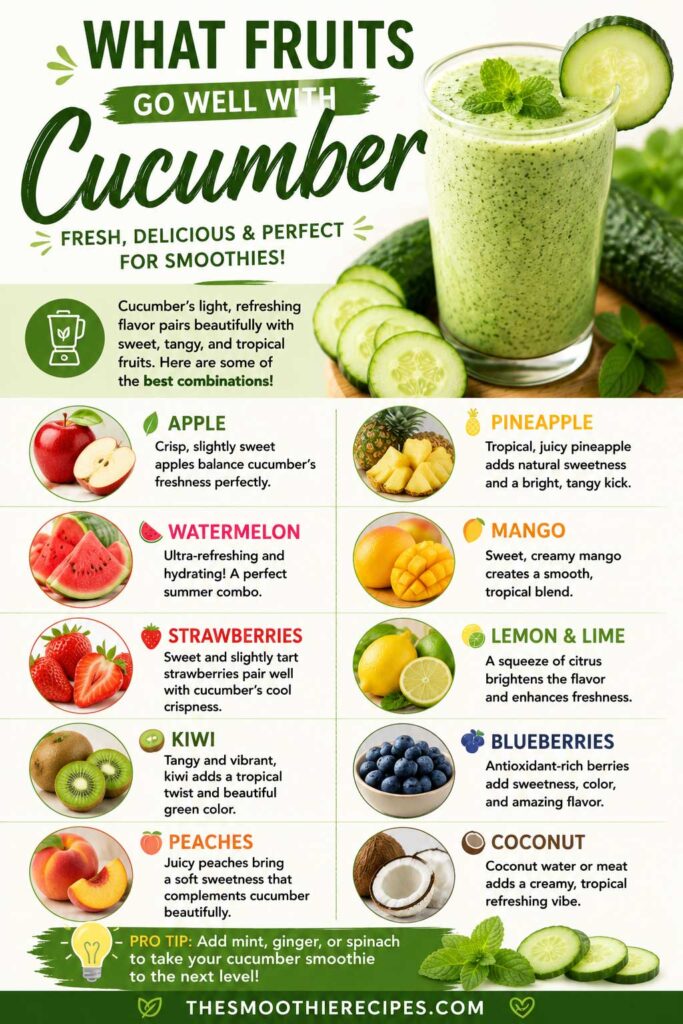
Choosing the right fruit is one of the easiest ways to get better results when using cucumber in smoothies. One of cucumber’s greatest strengths is how easily it pairs with fruit.
Apple
Apple and cucumber are a natural combination. Apple contributes sweetness and a slightly tart fruit flavor, while cucumber keeps the drink crisp and refreshing.
This pairing works particularly well with green apples when you want a brighter flavor or sweeter varieties when you want a softer, fruitier drink.
Pineapple
Pineapple provides enough sweetness and acidity to contrast beautifully with cucumber.
This is an excellent combination for tropical smoothies, particularly when you add lime, coconut water, or mint.
Watermelon
Cucumber and watermelon are both naturally refreshing ingredients, making them an ideal warm-weather combination.
Because both contain plenty of water, you may need very little additional liquid when blending them together.
Mango
Mango brings sweetness and a creamy texture that cucumber doesn’t provide on its own.
Together, they create a nice balance between rich tropical fruit and crisp freshness.
Strawberries
Strawberries add sweetness, color, and a slightly tart berry flavor while cucumber keeps the smoothie light.
Add banana or yogurt if you want this combination to become creamier.
Lemon And Lime
Technically citrus fruits, lemon and lime deserve special mention because even a small amount can transform a cucumber smoothie.
Their acidity brightens cucumber’s mild flavor and works especially well with mint, apple, pineapple, or ginger.
Kiwi
Kiwi has a tangy sweetness that complements cucumber nicely. It’s an especially good pairing for green smoothies where you want plenty of fresh fruit flavor without relying entirely on banana.
Other Ingredients That Pair Well With Cucumber
Cucumber isn’t limited to fruit combinations.
Fresh mint is one of the best additions when you want an especially cool, refreshing flavor. Ginger gives cucumber smoothies a warm, spicy contrast, while spinach adds leafy greens without overwhelming the drink.
Avocado can be useful when you love cucumber’s freshness but want a creamier texture. Chia seeds and ground flaxseed are easy add-ins when you want more body, though chia can noticeably thicken the smoothie if it sits for a few minutes.
For the liquid, water keeps things simple, while coconut water works particularly well in tropical cucumber smoothies. Plant-based milk can be used for creamier combinations, although I generally prefer lighter liquids when cucumber is one of the main flavors.
How To Use Cucumber In Smoothies
Using cucumber in smoothies couldn’t be much easier, and there’s very little prep involved.
Wash the cucumber thoroughly and trim both ends. For general produce handling, the FDA recommends washing fresh fruits and vegetables under running water before preparing them. Peel it if the skin is particularly thick or bitter, then cut it into rough chunks—there’s no need to dice it finely if you’re using a decent blender.
Add the cucumber with the rest of your ingredients, but hold back some of the liquid at first. Cucumber releases quite a bit of water as it blends, and it’s much easier to thin a smoothie than fix one that’s already watery.
Blend until completely smooth. If the smoothie is thicker than you’d like, gradually add more liquid until you reach the consistency you prefer.
Taste before serving. Depending on the other ingredients, a squeeze of lemon or lime can brighten the flavor considerably.
Fresh Vs. Frozen Cucumber
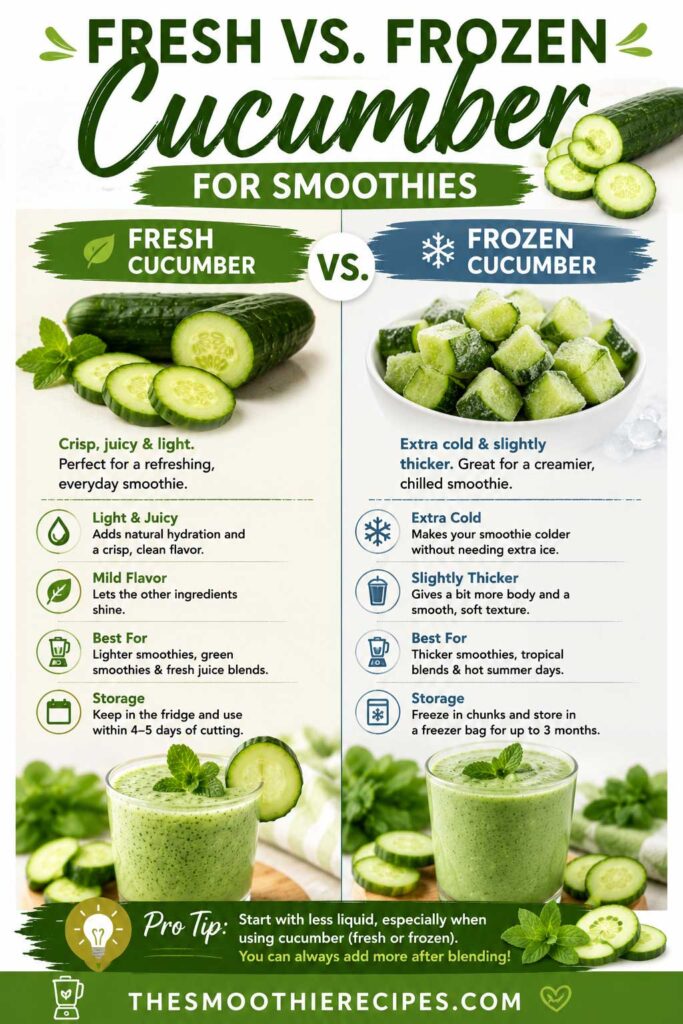
You can use either fresh or frozen cucumber in smoothies, depending on the texture and temperature you want. Fresh cucumber is the easiest choice, but freezing cucumber can be useful too.
Fresh cucumber produces a light, juicy smoothie and is ideal when you’re looking for a refreshing consistency.
Frozen cucumber makes the smoothie colder and slightly thicker than fresh cucumber, although it won’t create the same creamy texture as frozen banana or mango.
To freeze cucumber, wash and chop it into smoothie-sized pieces. You can freeze the pieces on a tray first before transferring them to a freezer-safe container or bag. This keeps them from freezing into one large block.
Frozen cucumber becomes softer after thawing, so I prefer using it directly from frozen in blended drinks rather than thawing it for salads.
How Much Cucumber Should You Put In A Smoothie?
Start at ½ cup if cucumber is playing a supporting role. If you want its fresh flavor to stand out more, work your way up to 1 cup.
Use less if you only want a subtle refreshing note. Use more when cucumber is intended to be one of the main ingredients.
Because cucumber releases liquid during blending, remember that increasing the cucumber can also make your smoothie thinner. If you’re using a large amount, reduce your other liquid ingredients until you see how everything blends together.
Do You Need To Add Liquid To A Cucumber Smoothie?
Usually, yes—but probably less than you think.
Cucumber releases quite a bit of water once blended, especially when it’s combined with other juicy ingredients such as watermelon, oranges, pineapple, or strawberries. That’s why I like to start with just a small splash of liquid and add more only if the blender needs help.
Water is the simplest option, while coconut water works nicely with tropical fruit. For a creamier smoothie, you can use dairy or plant-based milk, but keep the amount modest so you don’t lose cucumber’s fresh flavor.
If you’re blending cucumber with several high-water fruits, try blending everything first before adding any extra liquid. You may find you barely need it.
How To Make A Cucumber Smoothie Taste Better
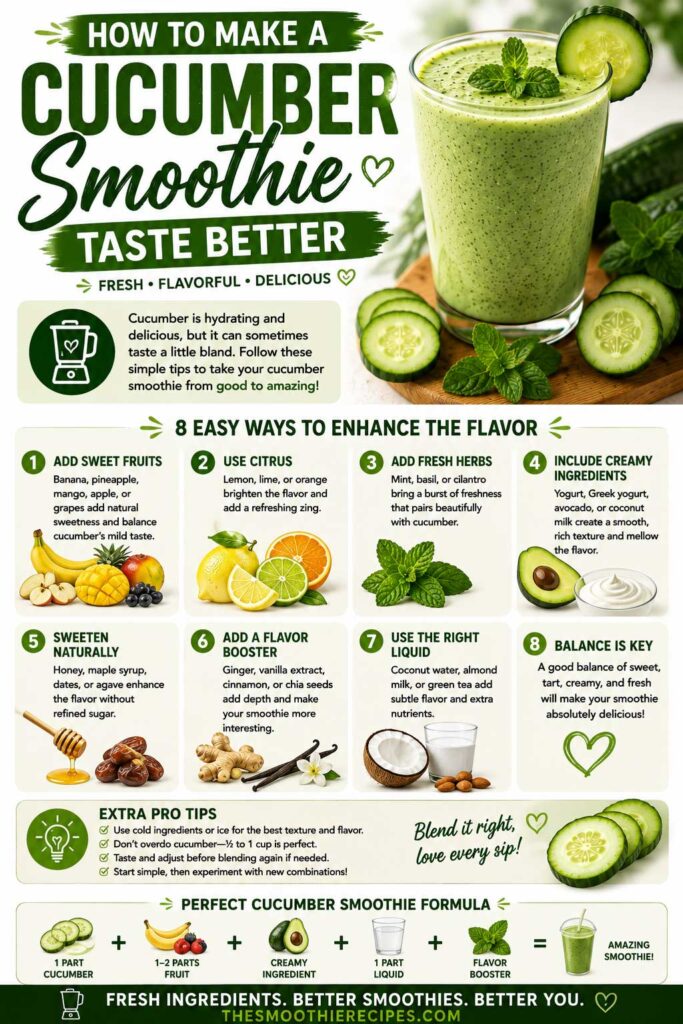
The secret isn’t covering up the cucumber flavor. It’s pairing it with ingredients that complement it.
If your cucumber smoothie tastes too green, add naturally sweet fruit such as pineapple, mango, banana, apple, or strawberries.
If it tastes flat, try a squeeze of fresh lemon or lime.
For more depth, fresh ginger can add warmth while mint creates an even more refreshing finish.
And if the smoothie feels too thin, use frozen fruit, avocado, yogurt, banana, chia seeds, or another thickening ingredient rather than continuing to add ice.
Common Cucumber Smoothie Mistakes
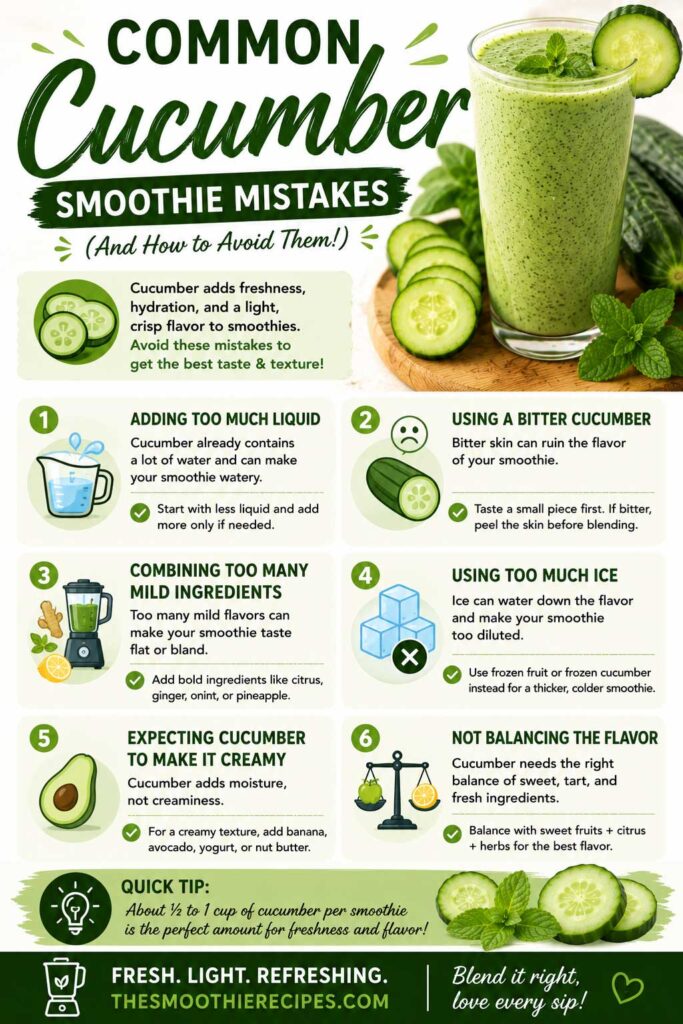
Adding Too Much Liquid
This is probably the easiest mistake to make.
Cucumber releases a surprising amount of moisture once blended. Adding your normal amount of smoothie liquid before blending can leave you with a drink that’s much thinner than expected.
Start conservatively and add more liquid only when necessary.
Using A Bitter Cucumber
Occasionally, a cucumber can have a noticeably bitter flavor, particularly around the skin and ends.
Taste a small piece before putting a large amount into your smoothie. If the skin is bitter but the flesh tastes good, peel it before blending.
Combining Too Many Mild Ingredients
Cucumber is subtle. If every other ingredient is equally mild, your smoothie can end up tasting flat.
Add an ingredient with personality, such as pineapple, berries, citrus, ginger, mint, or a flavorful apple.
Using Too Much Ice
It’s tempting to throw in a handful of ice to make a cucumber smoothie colder, but cucumber is already bringing plenty of water to the blender. Too much ice can leave the finished drink thin and washed out.
I prefer frozen fruit—or a few pieces of frozen cucumber—when I want a colder smoothie without diluting the flavor.
Expecting Cucumber To Make A Smoothie Creamy
Cucumber provides moisture, not creaminess.
For a creamy cucumber smoothie, pair it with banana, avocado, Greek yogurt, or another ingredient that adds body.
One of the best things about using cucumber in smoothies is how many different directions you can take the flavor.
Easy Cucumber Smoothie Combination Ideas
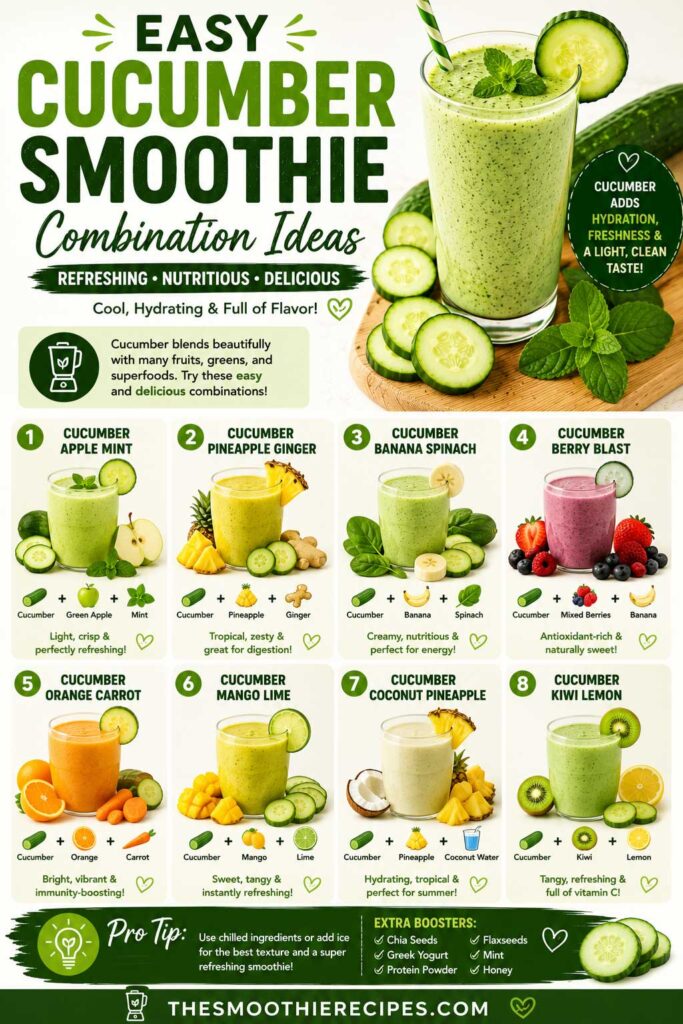
Once you understand cucumber’s flavor, creating your own combinations becomes easy.
Cucumber + apple + lemon creates a crisp, bright smoothie with a pleasant balance of sweetness and acidity.
Cucumber + pineapple + lime gives you a refreshing tropical combination that’s especially good served very cold.
Cucumber + watermelon + mint makes a light summer smoothie where cucumber complements watermelon’s natural sweetness.
Cucumber + mango + pineapple creates a sweeter tropical smoothie with cucumber working quietly in the background.
Cucumber + spinach + apple + ginger is an excellent green combination when you want fruit flavor alongside leafy greens.
Cucumber + strawberry + banana is a good option when you want something creamier but still appreciate the freshness cucumber brings.
Use these combinations as starting points and adjust the amounts according to your preferred sweetness and texture.
Cucumber Smoothie Recipes To Try
These recipes are a great place to start if you want to experiment with cucumber in smoothies beyond the basic fruit combinations. If you’re ready to start blending with cucumber, you already have several delicious ways to try it.
Cucumber Banana Basil Smoothie combines crisp cucumber with creamy banana and fresh basil. It’s a good choice when you want something smoother and more substantial while still keeping cucumber’s fresh flavor.
For something lighter, try the Cucumber Lime Cooler. Cucumber and lime are a natural match—the cucumber keeps the drink cool and refreshing while lime adds the brightness that cucumber sometimes needs.
The Carrot Cucumber Lemonade takes cucumber in a different direction, pairing it with carrot and citrus for a colorful, refreshing drink with a little more personality.
And don’t forget the Apple Cucumber Cooler. Apple adds natural sweetness and crisp fruit flavor, making this one of the easiest cucumber combinations to try if you’re new to using cucumber in blended drinks.
Together, these recipes show just how versatile cucumber can be. It can work with creamy banana, aromatic basil, sweet apple, earthy carrot, or bright citrus without taking over the drink.
How To Choose A Good Cucumber
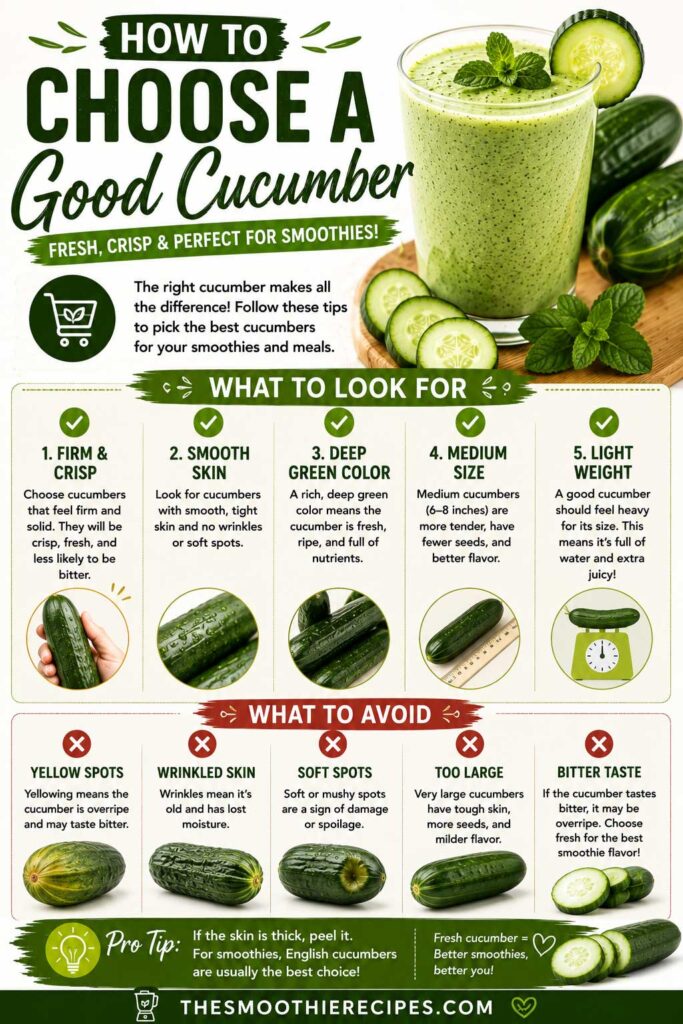
Look for cucumbers that feel firm when gently squeezed and have fresh-looking skin.
Avoid cucumbers with large soft spots, extensive wrinkling, or areas that appear wet or mushy.
Size isn’t necessarily an indication of quality. For smoothies, flavor and freshness matter much more.
If you’re buying English cucumbers, look for ones that feel consistently firm from end to end. Persian cucumbers should also feel crisp rather than flexible.
How To Store Fresh Cucumber
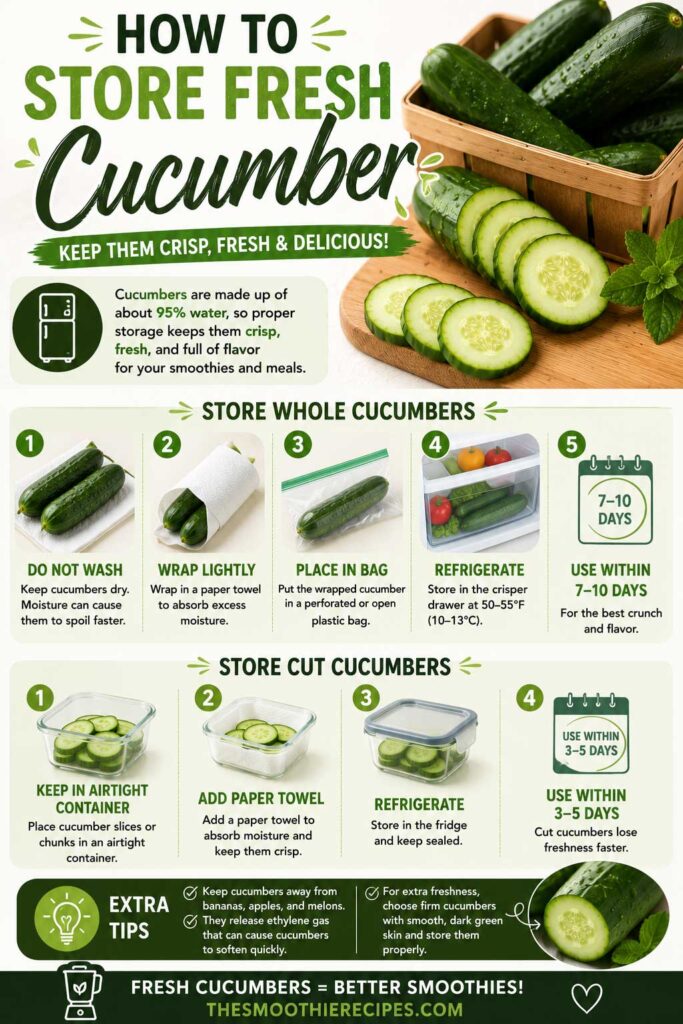
Keep whole cucumbers refrigerated until you’re ready to use them. Once cut, wrap the remaining cucumber or place it in an airtight container in the refrigerator.
I like to check cut cucumber before using it rather than relying only on a specific number of days. If it has become slimy, unusually soft, or developed an off smell, it’s time to discard it.
Have more cucumber than you can use while it’s fresh? Chop it into smoothie-sized pieces and freeze it. The texture won’t be suitable for a crisp salad after freezing, but that’s not a problem when it’s headed straight for the blender.
Frequently Asked Questions About Cucumber in Smoothies
Is Cucumber Good In Smoothies?
Yes. Cucumber adds moisture, freshness, and a mild flavor that works particularly well with fruit, citrus, greens, mint, and ginger.
Can You Blend Cucumber With The Skin On?
Yes, particularly when using English or Persian cucumbers with tender skin. Standard cucumbers with thicker or bitter skin can be peeled before blending.
Can You Put Raw Cucumber In A Smoothie?
Yes. Cucumber can be washed, chopped, and added to smoothies raw. There’s no need to cook it first.
What Fruit Goes Best With Cucumber?
Apple, pineapple, watermelon, mango, strawberry, kiwi, lemon, and lime are all excellent cucumber pairings. The best choice depends on whether you want the smoothie to taste sweet, tropical, tart, or especially refreshing.
Is Cucumber And Banana A Good Combination?
Yes. Banana adds sweetness and creaminess while cucumber contributes freshness and moisture. It’s a useful combination when you want cucumber in a thicker smoothie.
Can You Freeze Cucumber For Smoothies?
Yes. Chop cucumber into pieces and freeze it for future smoothies. Frozen cucumber works especially well when you want a colder drink without adding lots of ice.
Does Cucumber Make Smoothies Watery?
It can if you use too much additional liquid. Because cucumber already contains plenty of water, start with less liquid than you normally use and adjust after blending.
Do You Need To Remove Cucumber Seeds Before Blending?
Usually not. Small, tender cucumber seeds blend easily. If you’re using a mature cucumber with unusually large or tough seeds, you can scoop them out first.
Can You Combine Cucumber With Milk In A Smoothie?
You can, although cucumber is particularly well suited to lighter smoothie bases. If you want a creamy cucumber smoothie, yogurt, plant-based milk, banana, or avocado can work well depending on the other ingredients.
Is English Cucumber Better For Smoothies?
English cucumber is one of the easiest varieties to use because it has thin skin, small seeds, and a mild flavor. However, regular and Persian cucumbers work well too.
Final Thoughts On Using Cucumber In Smoothies
If you’re new to using cucumber in smoothies, start simple. Apple and cucumber is probably my favorite beginner combination, while pineapple is a great choice if you want something sweeter and more tropical.
The biggest thing to remember is that cucumber brings its own water to the blender. Start with less liquid than you think you’ll need, taste as you go, and use fruit, citrus, ginger, or mint to build the flavor around it.
And don’t worry if you have half a cucumber left after making a salad. Chop it up, toss it in the blender with some fruit, and you might find yourself buying an extra cucumber next time just for smoothies.
